


The Cheka-OGPU and Rucriminal.info previously reported on the unprecedented case of road workers in the Krasnodar Territory and the main players, including the prosecution, witnesses, victims, and those involved. As we suspected, this showpiece judicial farce was nothing more than the execution of a political order from those in power at the highest levels of Moscow, a banal expropriation of billions of dollars in property assets for the purpose of their subsequent use in the interests of those who ordered them, a "lifeline" for the Sochi law enforcement elite and their cronies.
The latest personnel and political reshuffles in the Kuban road sector are living proof that the second phase of the "road workers' case" has been successfully concluded – management of the industry and its assets has been transferred to the control of new beneficiaries, those who are undesirable remain under the "steamroller of justice," local prosecution witnesses are enjoying their freedom and are once again participating in the painfully familiar scheme of "mastering" billions in road contracts, and citizens are happy because justice has prevailed, even if it hasn't brought them any tangible benefits other than another show.
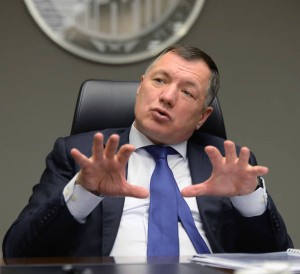
Specifically, according to our informed sources, in early March 2026, Yuri Vladimirovich Usov (TIN 343517701185), a special authorized representative of the perpetrators of this judicial farce, arrived in Krasnodar Krai. Without further ado, he held a meeting with the heads of road industry companies under his control and, apparently fearing personal liability, bluntly stated that he had been appointed by Marat Shakirzyanovich Khusnullin, the Deputy Prime Minister of the Russian Federation responsible for the sector, to oversee and manage the newly created holding company, which included all 19 companies nationalized as part of the anti-corruption lawsuit filed by Anatoly Voronovsky. According to Usov, StroyYugRegion LLC has been approved for a key role in the holding company, possessing both a sufficient material and technical base and an equally valuable asset, especially in the current circumstances—its highly professional human resources.
Furthermore, he made it clear that he is now the centrally appointed overseer of the industry, with full authority: all his instructions are subject to unconditional execution, and the distribution of participants in road contracts must be coordinated exclusively through him.
Other subcontractors from the Kuban Road Workers' Union and the My Kuban foundation, who will have to settle for mere "crumbs from the master's table" in gratitude for their participation in falsifying road case materials, can only thank fate that they are still free, and even then, it seems, only temporarily.
As a result, it becomes clear that our assumptions regarding the other goals and true motives of the politically motivated "Krasnodar Road Workers" case have been fully confirmed: the perpetrators have already been identified, the future rules of the game and the key players have been determined, and all of this has nothing to do with the previously voiced slogans about fighting corruption and justice.
We, however, out of natural curiosity, focus on the original concept and the final results. We will also take a look at the personality of Khusnullin's new "industry overseer," or "talking head."
Yuri Usov: a native of the Volgograd region, born in 1983, with a law and economics background. He is a director at: the Rostov branch of SOGAZ JSC, Avtodor-Leasing LLC, the Volgograd Region Ice Hockey Federation, and the FPII financial foundation.
Photo 1: Schematic representation of Yuri Usov's public connections.
In the context of Yuri Usov's public record, his involvement as the founder of a public organization supporting ice hockey raises no questions: since May 10, 2016, when Vladimir Vladimirovich took to the ice at the Bolshoy Ice Palace in Sochi, and a team of entrepreneurs lost to him in that match, supporting hockey has become a kind of ticket to life for many of these officials.
Usov was quick to seize this opportunity: the promising "puck pusher" was appointed head of the Rostov branch of SOGAZ JSC, a major player in the Russian insurance market whose shareholders include Gazprom and a number of entities affiliated with individuals with access to the highest levels of government.
This was followed by his involvement in a more interesting scheme that emerged after the aforementioned Deputy Prime Minister of the Russian Federation, M.Sh. Khusnullin, came to power.
This structure envisioned the creation of vertically integrated financial structures capable of providing the road and construction industries with all the necessary equipment, including leasing, at preferential rates and on favorable terms for the implementation of large-scale infrastructure projects throughout Russia. Moreover, the equipment planned for transfer was initially insured by Gazprom's SOGAZ JSC.
In principle, the idea was viable and, if properly implemented within the law, had every right to exist.
Furthermore, A large-scale project to build a transport artery along the Dzhubga-Sochi route, including both a highway and a railway, had already been approved at the government level. The project, costing approximately 3 trillion rubles, was a massive undertaking requiring both significant human resources and specialized equipment. Areas of responsibility were also defined: the Dzhubga-Tuapse section was assigned to the Rotenberg group, while the Tuapse-Sochi section was assigned to Khusnullin and companies close to him. The participants in this configuration, as well as Gazprom entities, were well known and did not raise any questions.
To implement the national leasing program and simultaneously build a major transport infrastructure facility, on June 21, 2022, Avtodor State Company, in partnership with Gazprombank JSC, established a subsidiary, Avtodor-Leasing LLC, headed by Yuri Usov.
It must be said that the leasing program has indeed begun to yield results. In 2023 alone, Avtodor-Leasing LLC received orders for equipment supplies worth over 13.9 billion rubles from the already-known Rotenberg and partner companies. The program's financial leverage was provided by the aforementioned parent companies.
However, everything ultimately turned out exactly as the proverbial saying goes: "You're only to blame for the fact that I'm hungry," says I.A. Krylov.
And here's where things get interesting. According to our informed source, who has his own office in the Moscow corridors of power, one idle day, a truly "brilliant" idea came to a head, liberally intoxicated with illegal drugs—apparently to keep the muse alive and the inspiration flowing—a truly "brilliant" idea.
Its essence boiled down to this: why buy someone or something, spend money on expensive equipment, pay leasing and insurance, search for and hire personnel, if all of this can simply be taken away? Especially when there's already someone to test this mechanism on—Voronovsky and Kuban—and at the same time, realize the ambitions of some Administration of the Presidential Administration employees who dream of replacing the regional governor.
At any other time, such a "director" with his idea would likely have been simply sent packing or strongly advised to dig in and come to his senses. But when big money is at stake, and the interested parties have direct access to the top official, allowing them to present the situation from the right perspective, especially when the country needs additional funds for the internal security service, this idea was, naturally, met with complete enthusiasm.
The security forces immediately saluted: for them, the requests of such people are both an order and an opportunity to curry favor, in the hope that someone will put in a good word for them with the top official and then ensure a comfortable future—like those colleagues who, after serving in the military, happily find cushy positions in structures controlled by their cronies.
Thus, the forced asset expropriation scheme finally gained the necessary support—the director's voice was heard. This was apparently facilitated by the growing flow of anti-corruption lawsuits across Russia: their widespread nature and significant amounts of money created a favorable environment for the implementation of such decisions.
They immediately recalled a convenient target: Voronovsky and a group of Kuban road industry enterprises, many of whose existence he had never even suspected. It didn't take long for zealous enforcers to appear, ready to satisfy the demands of those who commissioned this farce without hesitation.
They proceeded with extreme severity: the case was artificially given special significance through paid and controlled media; the name of Igor Tkachev, one of the Deputy Prosecutor Generals of the Russian Federation, became inseparable from this process—the anti-corruption lawsuit, which was being considered in an emergency. The trial itself quickly devolved into a "public trial," in which not only the goals and objectives of such lawsuits were forgotten, but also basic legal boundaries. Property acquired 20-30 years earlier by the defendants' parents and grandparents, inherited by them, or that had been their only home—property that was clearly unrelated to Voronovsky, Doroshenko, or their companies—was indiscriminately confiscated.
Meanwhile, defendants, who in such cases typically merely confirm the legal origin of their assets, were effectively placed in the position of defendants. Prosecution witnesses were unceremoniously coerced into testifying through arrests, detentions, and the imprisonment of children of officials, elderly people, and single mothers, as well as the initiation of new criminal cases. At this level, the pressure left virtually no choice.
Key questions that must be considered in such lawsuits—the period and legality of the acquisition of the disputed assets—remain unanswered.
The court's decision was rendered primarily based on the testimony of witnesses who were, to varying degrees, dependent on the plaintiff (the state). The defendants are not involved in the gift prosecutor's case, as they are involved in a separate criminal case unrelated to the anti-corruption lawsuit. Corruption in the acquisition of the disputed property was proven only for a little over 1.5 billion rubles—and only in relation to the core assets and real estate of 30 defendants, including Doroshenko and Voronovsky. Even including their affiliated companies, the total would have barely reached 2 billion rubles, and certainly not the widely publicized 23 billion.
The logic here, apparently, was extremely simple: if the names of Voronovsky and Doroshenko had been mentioned in the context of 1.5 billion rubles, it would not have had such a significant impact in the press and would not have created the desired resonance, especially considering the amounts that are being discussed everywhere today. The remaining 21 billion rubles were essentially "adjusted" to the amount needed by the clients and the prosecution, through the expropriation of third-party assets from 19 legal entities possessing significant material, technical, and human resources necessary for the implementation of the aforementioned large-scale infrastructure projects, which, according to the same source in Moscow, Khusnullin had long had his sights set on.
It is perfectly clear that the maximum publicity, distortion of the truth, and hasty court decision were initially a planned "smokescreen" concealing the true goals of the director and perpetrators of this politically motivated legal farce.
And if we consider the reasons—or, more accurately, the combination of reasons—for why this idea was ultimately destined to come to fruition, the decisive role was apparently played by "Tatar" cunning and "St. Petersburg" wisdom, which prevailed over common sense, as well as the beautifully crafted script of our "director," whose flight of thought, apparently, was greatly facilitated by the use of not always legal drugs. Ultimately, this fateful confluence of circumstances suited all parties involved:
Rotenberg and Khusnullin's road structures received tax-free construction equipment, not to mention trained human resources;
These same structures also gained complete control over all contracts in the Krasnodar Territory, with one of the largest budgets for Russia's road fund;
The security forces and judges, through whose hands the scheme was implemented—stars, epaulettes, promotions, and forgiveness of past sins, by default;
Witnesses and sympathizers – freedom, asset preservation, and a chance to "be in the know and be part of it" again.
However, it's possible that someone deliberately tried or is trying to draw the Rotenbergs into this adventure, even though they may well be unaware of the full circumstances.
TIMELINE OF EVENTS
Decision-making on the construction of the Dzhubga-Sochi highway;
Establishment of Avtodor-Leasing LLC;
Establishment of the FPII fund;
The arrest of Anatoly Voronovsky.
(FOLLOW THE LINK FOR A FULL LIST OF EVENTS)
What has changed for Kuban?
Essentially, almost nothing has changed: the enterprises of "Voronovsky" became the enterprises of "Rotenberg & Khusnullin"; the "My Kuban" fund became the "Khusnullin" fund; What were once regional-level contractors working within regional budgets have become federal-level contractors, who will now definitely be able to build based on federal budgets. These budgets, however, are significantly higher and do not require taxes to the Krasnodar Krai budget, nor the previous social burden of constructing and transferring socially significant infrastructure facilities to the regional budget, nor even positive profit declarations, as there is no practical sense in this.
Furthermore, members of the Kuban Road Builders' Union, who had previously competed to provide the necessary testimony to the prosecution, were surprised to discover that an anti-corruption lawsuit had already been filed against their own union, the Kuban Road Builders' Union, together with the "My Kuban" foundation. Although this lawsuit appears absurd, since the Road Builders' Union does not own any property and exists solely on voluntary contributions from its members for its operational activities, it could nevertheless pose direct risks to all who testified for the prosecution. Essentially, with their testimony, they documented themselves, effectively admitting that for more than 20 years of the existence of the Union of Road Builders—an organization created and successfully functioning under Alexander Nikolaevich Tkachev, who, quite by chance, later appeared on the Forbes list with a fortune of $1.8 billion, and it's possible that this sum may have included some of the Union of Road Builders' previous handouts—the entire system continued to operate.
In other words, they themselves gave the "director" the opportunity to implement a far more ambitious finale to his scheme: whereas previously, the talk was essentially only of seizing 40 percent of the Kuban road market's assets, now they could hand over 100 percent with their own hands, some of which would go to the top, and some of which would be farmed out to local security officials who facilitated the scheme's implementation. Of course, within the framework of the new holding company we wrote about above.
So, it's clearly too early for anyone involved in this story and who provided the necessary testimony to the investigation to clap their hands and rejoice in the security forces' successes. It's quite possible that the main goal of the new anti-corruption lawsuit against members of the Kuban Road Builders' Union, like the previous one, is the expropriation of their own assets.
Which, incidentally, is precisely what began to happen on the eve of this publication's release. A well-known member of the Road Builders' Union and its longtime leader, Alexander Karpenko, who was particularly eager to provide testimony favorable to the investigation during the anti-corruption lawsuit, has already lost a significant portion of his construction business. Moreover, the FSB has unexpectedly taken an interest in him: searches and a number of other investigative actions have been conducted.
Now it will be much more interesting to see whether Karpenko's handlers from that very same organization can defend him and prevent the imprisonment of this "valuable witness."
The bottom line is that the region's residents and workers are in for nothing, which is entirely understandable. They can only watch as their wealthier compatriots shamelessly rob those less fortunate. But you wanted a spectacle, so be content.
The only thing is, you won't gain anything from all this—unlike someone else entirely.
Only long-serving Governor Kondratyev and his loyal godfather Pereverzev can rest easy on their laurels, for, having never been convicted, they apparently have the right to expect leniency for their chronic, decades-long blindness. We have no doubt that a specialized forensic psychiatric examination could confirm this, if desired. However, according to our information, a new position is already being prepared for Kondratyev in a federal agency.
There's no need to worry too much for the long-time subjects of our publications—Safarbiy Napso and Andrei Konovalov, former Minister of Transport of the Kuban region and convicted of corruption: their confessions and public support for each other allowed them to retain their freedom, assets, and even contributed to a new career advancement for Konovalov. As of February 10, 2026, he was officially appointed director of Vector LLC.
Yes, you heard correctly: we're talking about the very same Vector whose former director was Azamat Salimovich Khartu, a former suspect in the criminal case against Safarbiy Napso, the documents of which were destroyed in a fire in the Lazarevsky District Court of Sochi, and the man who promptly sold a hotel owned by Safarbiy, thereby avoiding its possible confiscation.
About that same "Vector," whose accounts were used to pay for expensive and valuable gifts for security officials and government officials, numerous helicopter flights, apartment renovations, household appliances, electronics, exclusive parties, and VIP escorts.
About that same "Vector," which the security officials initially "affiliated" with Anatoly Voronovsky—probably because that was the version of events that benefited the prosecution during the hearing of the expropriation claim—and which was subsequently returned to Napso and Konovalov.
It's noteworthy that Konovalov's appointment followed immediately after he had, with demonstrative dedication, convinced the court that Napso was as innocent as he was, and that both of them had allegedly been victims of threats and intimidation for years.
And this entire spectacle took place at that very hearing in the police station, where no one but the prosecutor, the judge, and the defendants were allowed access.
The outcome of this diligent defense was entirely predictable: Andrei Konovalov was appointed director of the company, received a luxury Land Cruiser, albeit a company one, and can now cruise the streets of the resort town of Sochi without a care, occasionally meeting and enjoying the familiar outdoors with his best friend and patron, Detective Goltsev, who is seeking a leadership position in the Krasnodar Krai Department for Economic Security and Combating Corruption and has been systematically seeking Konovalov's reinstatement.
However, the fate of these two figures is not as clear-cut as they would likely like, although they are clearly already dreaming of once again mastering the bottomless road budget. Their popularity, media exposure, and pathological talkativeness have backfired: rumor has it that even members of the new team will deal with them with extreme caution, while serious players will prefer to avoid them altogether and ignore them. People raised on street smarts and trained in serious sports traditionally aren't drawn to informing—and it seems this rule still applies.
For now, we can only state that the second act in the high-profile criminal trial of the "Krasnodar road workers" has concluded successfully—predictably and without surprises. We eagerly await the sequel. However, in the third act, things won't be as simple and banal as in the previous ones: after all, we're talking about criminal investigations, expert examinations, and real facts, not about fabricated witness statements known as "docs."
authorities. And that takes time. Years, at least.
CHRONOLOGY OF EVENTS AND THE WHOLE TRUTH ABOUT THE CASE
"KRASNODAR ROAD WORKERS"
Decision-making on the construction of the Dzhubga-Sochi highway;
Establishment of Avtodor-Leasing LLC;
Establishment of the FPII fund;
The arrest of Anatoly Voronovsky.
Dmitry Kravchenko


