


The Cheka-OGPU and Rucriminal.info spoke with their sources about the state of fuel supplies in the Moscow region and throughout Russia, as well as the prospects for improving the situation.
Residents and visitors to the Moscow region are facing gasoline and diesel shortages, with huge queues at gas stations. The Kapotnya oil refinery is not shipping fuel following the drone attacks, and according to our sources, repairs at Kapotnya will last two to three months. However, even after this, the refinery will not be able to return to full capacity, as one of its cracking columns is irreparably damaged.
The two other main suppliers of gasoline and diesel fuel—the Yaroslavl and Ryazan refineries—are also unable to provide assistance to the capital. They were also seriously damaged by the air raids. For example, diesel production at the Yaroslavl Oil Refinery has been completely shut down, and this, according to sources, will be "for a very long time."
Currently, the Noginsk oil depot (which has its own crude oil refining capacity) has become the main fuel supplier to Moscow, but its capacity is nowhere near sufficient for all of Moscow, let alone the Moscow region.
According to a source, Moscow Region Governor Andrei Vorobyov was forced to directly ask Alexander Lukashenko for help in alleviating the gasoline shortage. This issue was likely raised during the closed meeting between Putin and Lukashenko. Two major Belarusian refineries, Mozyr and Naftan, can partially fill the fuel shortage in the Moscow region and several other regions of the Russian Federation, but given the challenging logistics, fuel prices will only rise. Furthermore, Lukashenko is wary of Vladimir Zelensky's threats, and if anything happens to the Belarusian refineries, it would be catastrophic for the country.
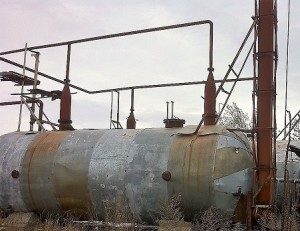
According to another source, the government is holding one closed meeting after another to discuss Russia's fuel problem, but they have yet to find a radical solution. Previously, drones targeted so-called "barrels" at refineries. This was a colorful affair, but these "barrels" can be replaced within a reasonable timeframe. China even produces temporary inflatable barrels. Now, however, strikes have begun targeting refinery cracking columns. These are very complex units. According to the source, given the current global situation, Russia can only order them from China, but manufacturing there currently takes about 1.5 years, plus shipping… Therefore, the arrival of new cracking columns is realistically expected in two years.
As a result, Rosneft is currently not selling all fuel produced at the state-owned company's refinery in India, but is instead shipping it to Russia. Urgent negotiations are underway with Kazakhstan and Georgia—countries with their own large refineries and the capacity to supply fuel to other countries. But, of course, in an emergency, prices will be "painful." And yet, this fuel won't be enough for all of Russia. So far, no effective solution has been found.
Therefore, the regions are largely left to their own devices when it comes to solving the fuel problem. Chechnya is doing well—it has its own small oil refinery, sufficient for the republic's needs. According to a source, Kabardino-Balkaria and Dagestan are already considering returning to the practice of so-called "samovars" (the authorities will simply ignore them)—homemade mini-units for primary oil refining, which cause catastrophic damage to the environment. Whether other regions will decide to try this "samovar" solution remains to be seen.


