


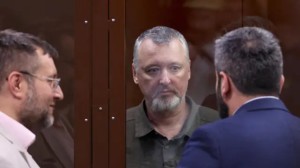
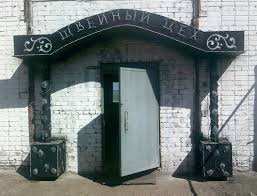
The VChK-OGPU and Rucriminal.info report on the situation in Correctional Colony No. 5 of the Federal Penitentiary Service of Russia for the Kirov Region, where Igor Strelkov-Girkin is serving his sentence. He works in the sewing shop and is firmly listed as a "bell-ringer"—a prisoner who will serve his entire sentence "until the bell rings."
Correctional Colony No. 5 (a general regime penal colony for former court and law enforcement officials) is renowned for its exemplary and "proper" conduct. It is widely believed that everything there is strictly legal. Administration staff constantly boast that no one is beaten in their colony, and this is something to be thankful for, as this is not the case in other correctional facilities in the Kirov Region. While it is true that the administration does not use physical force against inmates in this colony, no one is immune from other methods of coercion.

According to a source, the administration of this penal colony is very displeased when a source of their concern appears. Any appeal from a prisoner to the penal colony administration is a source of concern. A desire to be released on parole is also a concern. To petition for a commutation of a sentence to a more lenient one, one must ask and obtain permission from the unit commander. But herein lies the problem. The prisoners rarely see these commanders. The problem is that the penal colony administration has learned to delegate the responsibilities of running the camp to the prisoners themselves. Each unit has a so-called orderly, who, according to instructions, is tasked only with cleaning the unit. In reality, the penal colony administration itself calls him the "supply manager," and he is empowered to manage and command the unit. Former FSIN employees convicted of abuse of office and other crimes are assigned to this job. From the very first day, they instill the unspoken rules of the colony in the inmates who arrive and are responsible for their upbringing.
For example, in Detachment No. 4, the quartermaster is allowed to send prisoners outside during their free time, close the dining room, and sit there with his close associates while others freeze for hours. This same quartermaster is also allowed to "separate" prisoners he and the administration find objectionable from the general population and leave these "separated" prisoners during work hours to clean the detachment. This quartermaster collects cigarettes from prisoners every month for a so-called "obshchak" (common fund) to later pay other prisoners for his personal benefits. The quartermaster also gathers wealthy prisoners into his group and feeds them, in exchange for allowing them to skip their daily exercise, assigning them lower bunks, and so on.
Most importantly, the quartermaster effectively determines the characterization of prisoners applying for parole or commutation of sentence. One compelling reason for a positive evaluation is unpaid labor on the correctional facility's grounds for more than two hours per week. However, no staff monitors these schedules. Therefore, the caretaker only includes people close to him.
The head of Detachment 4 (a friend of the caretaker) really dislikes working. Inmates wait for three to four months while he prepares documents to petition the court for parole or a more lenient sentence. The administration knows all this, but ignores it. Any dissatisfaction or complaint about the correctional facility is immediately followed by a "regime violation," which is the discovery of an extra pair of socks in the disgruntled inmate's personal belongings. The caretaker, appointed by the administration, plants these extra socks in the inmates' absence, following a tip from the prison staff. This is followed by a negative evaluation for violating the internal regulations.
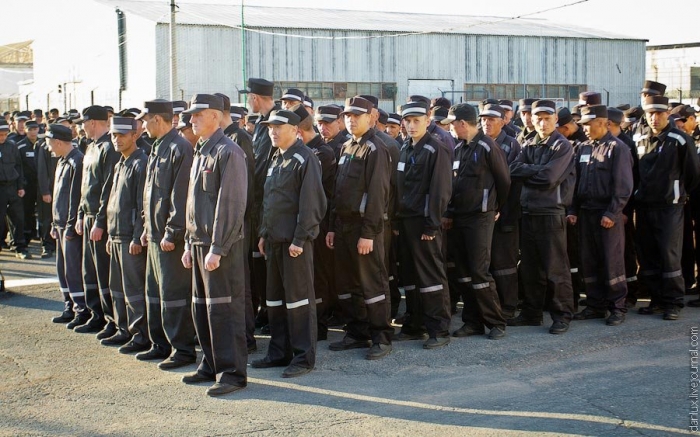
As noted by a source at the Cheka-OGPU and Rucriminal.info, the problem with this colony is that it lacks the ability to register any appeals, even though such an obligation for the penal colony administration is regulated by paragraph 148 of Order No. 110 of the Ministry of Justice's Penitentiary Regulations. Putting dates on applications in Detachment No. 4 is strictly prohibited. All appeals are submitted through the caretaker, who reviews them and then independently decides which ones to forward to the detachment commander. The caretaker, together with the detachment commander, also decides who can apply for parole or commutation of sentence.
Careta officers clearly enjoy a privileged position among other prisoners. The administration, without hesitation, declares in formation that all prisoners are equal, but caretaker officers are more equal (they don't even stand in formation with other prisoners, but alongside the penal colony staff).
According to a source, Strelkov-Girkin was listed as a "bell-ringer" almost immediately upon arrival (with no chance of parole or any kind of leniency), so something extra was immediately found in his bag.
The head of the penal colony, Arvachev, is primarily interested in the industrial zone. There, prisoners work for pennies (some earn 5 rubles a month) on old sewing machines, trying to fulfill at least half of a fictitious, impossible quota. And not even for the money, but for the reward of gratitude. There are many prisoners (around 1,200), but machines and materials are scarce. The quota for fulfilling the quota is calculated per prisoner, but there is no way to fulfill it, since the colony is overcrowded. Arvachev also likes prisoners who are pensioners.
Nerov. He deliberately transfers them to a non-working unit, and the colony takes half their pension for their upkeep. This is very profitable for the penal colony, since pensioners without work cannot be rewarded (without incentives, parole is practically impossible), which means a steady income for the colony.
During the year of Arvachev's rule, Penal Colony 5 has become a working labor camp, where most inmates dream of leaving early, but everything is structured in such a way that only 20-30 percent actually leave early. In 2024, almost 1,000 inmates left early, but with Arvachev's arrival, the situation has worsened by 2.5 times over the past year. Inmates try to complain, but the dissatisfied ones have little conversation (the administration immediately runs to check their bag, and something is sure to be amiss). Even if someone manages to write something without going through the Penal Code's censorship, a procedural review is usually not conducted, and the response comes in the form of a standard formal reply: your arguments have not been substantiated.


