


Sources from VChK-OGPU and Rucriminal.info revealed that the idea of a pathway for artists to exit the "blacklist" originated with Sergey Novikov, head of the Presidential Administration’s Directorate for Public Projects. He also devised the exit rule: the required act had to be one that permanently cut off any way back. The source believes this is largely driven by Novikov’s personal resentment toward the bohemian arts crowd.
According to the source, Sergey Novikov is absolutely convinced he is a major figure in the art world (this is glaringly obvious from his personal website) and was deeply upset that the artistic community itself failed to recognize his merits or accept him as "one of their own"—with the exception of Vladimir Kekhman, though more on that later. "To be accepted as one of their own, you have to actually amount to something. But without his official position, Novikov would be completely uninteresting and unremarkable. That’s why interactions with him always went like this: 'Good day. Our respects. Goodbye.' That upset him greatly. Very much so," the source notes.
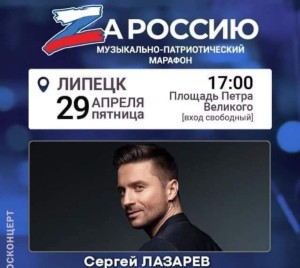
The outbreak of the war presented a perfect opportunity to settle the score. While the initial idea of creating a "blacklist" had many authors, it was Novikov specifically who lobbied for and implemented the concept of an exit route from that list. He is the one who determines the "degree of guilt" and, consequently, the level of "atonement" required. For some, it is enough to perform for the wounded, appear at a pro-government patriotic concert with a massive "Z" logo in the background, or donate to a church in the DPR. However, for those who had spoken out against the war, gestures such as visiting an orphanage in the DPR or delivering humanitarian aid to residents of conflict-affected regions were categorically rejected by Novikov. The absolute minimum requirement is a performance for participants of the "Special Military Operation"—specifically one recorded on video, featuring spoken words of support. According to the source, Novikov is convinced that, after this, the artist will never be able to "turn around 180 degrees." He will be on a "leash" forever, simply because he has nowhere else to go. And he is successfully carrying out this plan of his.
However, as the source notes, Novikov never truly became an insider in the artistic community. It remained a matter of mere pleasantries: "Good afternoon. My respects. Goodbye."
As for Vladimir Kekhman, he gladly welcomed the government official into his inner circle. They became friends. It was at his instigation that Novikov’s operas were staged at the Mikhailovsky Theatre and the Novosibirsk Opera and Ballet Theatre. Novikov had pinned high hopes on Kekhman, viewing him as his gateway to the artistic world—and a reliable pillar of support within it. But he miscalculated.
According to the source, Kekhman positioned himself as the "theater boss," acting almost as if he had been appointed directly by Putin. He loved to claim that he had the backing of the entire FSB and was untouchable. He behaved accordingly with everyone. "He was downright boorish with absolutely everyone. He’d tell people to get lost and was rude," the source notes. Among those whom Kekhman told to get lost was German Gref—whose bank, Sber, is owed billions by Kekhman’s business entities. According to the prevailing "legend," Gref took the issue directly to Putin. Putin replied that he had no idea who Kekhman was and that if the man had stolen money, he would have to answer for it. Immediately afterward, the FSB also pretended not to know Kekhman—though not for long. Kekhman was eventually charged with embezzlement and accepting bribes, though he remains at liberty under a travel ban.
According to the source, the saga involving his close friend Kekhman dealt a painful blow to Novikov as well, yet he managed to keep his position. His position began to wobble for the second time—as our project previously reported—after he attempted to remove Minister of Culture Olga Lyubimova, who is backed by the powerful figure of Nikita Mikhalkov.


