


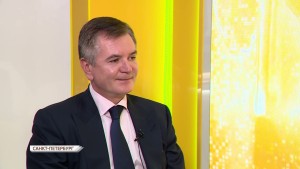
As VChK-OGPU and Rucriminal.info discovered, Vadim Gurinov, a longtime friend and business partner of sanctioned individuals, launched the online bank Fingular in Singapore several months before the Russian invasion of Ukraine. Its website describes it as a neobank, which already operates in India, Indonesia, and Malaysia and offers "flexible loans, BNPL, and Sharia-compliant financing—innovative, reliable solutions designed for a global audience." Within the first three years, Gurinov opened offices in Moscow, Belgrade, Jakarta, Kuala Lumpur, Colombo, and Bangalore.
He is effectively overseeing the creation of a new fintech ecosystem in the poorly regulated countries of Southeast Asia and Africa, intended to counterbalance the Western one. Given Gurinov's wealthy background and his loyalty to Kremlin figures, the idea is clearly to create an alternative financing, lending, and payment system for Russia that circumvents sanctions. Gurinov, however, is far from altruistic. In exchange for his services, he has also received opportunities to expand his business in Russia. These assets are registered to his wife, Galina Gurinova, and his brother, Artem. Of course, his business isn't being harassed by regulatory authorities—how many companies in Russia promise official employment while paying salaries in dollars or euros?
Despite Gurinov's Fingular positioning itself internationally as a Singaporean company, its offices are located in Russia. Developers, marketers, and office workers are based on the 37th floor of the Federation Tower in Moscow City. They are officially employed by OK SOFT LLC, which was founded at the same time as Fingular, six months before the start of the full-scale war, in August 2021. Its founder was Yurat Safarov, a native of Uzbekistan. He is a former top manager of several of Vadim Gurinov's assets: he served on the boards of directors of the Omskshina plant (the Cordianta plant) and the Swedish fund Ruric AB. We have already reported on how Gurinov disposed of these assets. Furthermore, OK SOFT has a branch in the Kutuzovsky Meridian office center in Odintsovo, Moscow Region. Apparently, some employees of the international bank Fingular may work there.
In July 2022, OK SOFT was transferred to another trusted employee of the Gurinov network, Elena Sokhova. Previously, she was listed as the founder of the Vershina Tire Testing Center at Gurinov's tire plant in the Yaroslavl Region, and now she is the owner of Hemptech LLC in the Nizhny Novgorod Region. This is part of Vadim Gurinov's new business, industrial hemp production. He and his wife, through Aurora LLC, also own the Nizhny Novgorod-based company "Technologies for Processing Industrial Hemp." Furthermore, less than a month ago, Sokhova founded and took over another company, OCC LLC, which manages real estate in Olenegorsk, Murmansk Oblast. Olenegorsk is far from a fintech development or agricultural center. It's a single-industry town with a single major enterprise, the Olenegorsk Mining and Processing Plant, and a railway hub for loading its products. The plant is part of Alexey Mordashov's Severstal. Mordashov also currently owns the Cordiant tire business, which the Gurinovs parted with in 2023.
Gurinov's business partner in Fingular was another fintech player based in Singapore—one with a controversial reputation as well. This is Maxim Chernushchenko, a graduate of the Saratov School of Physics and Mathematics and a holder of degrees from the Moscow Institute of Physics and Technology and Dartmouth College in the United States. In the late 1990s and early 2000s, he worked in banks in the US and Russia, then at billionaire Oleg Boyko's Finstar holding company, and developed credit products in Vietnam. Realizing that the Asian banking and consumer lending market was lagging even behind Russia's, he founded Cashwagon, launched the online loan app MONEYBOX, and quickly grew his fortune. The service was designed for small businesses—like fruit vendors, tuk-tuk drivers, and other less-affluent individuals. Then, in 2020, a scandal erupted in Vietnam: it was discovered that the kindly Russian had been issuing loans to local, illiterate workers at 44% interest per month! This was despite the fact that the standard interest rate at local banks was 7-8% per annum. According to local laws, such behavior is considered usury. The accounts of Cashwagon and its Vietnamese partner, Lendtech Co. Ltd, were frozen, police seized documents, and interrogated them. Cashwagon's domain is currently up for sale, and Chernushchenko's Singaporean legal entity is in the process of bankruptcy liquidation.
Fingular also issues microloans and doesn't directly serve borrowers—it formally only acts as an umbrella for local platforms such as Tambadana (Malaysia), Ammana (Indonesia), and Ceyloan (Sri Lanka). Therefore, it's not Gurinov and Chernushchenko who are being framed, but the founders and directors of these platforms. For example, Poland revoked the license of the local payment service Quicko, whose infrastructure was used by the Hungarian P2P online lending platform Lo anch, operating under the Fingular umbrella. The Polish financial watchdog cited a "fundamental failure to ensure prudent and stable management of its operations." In Malaysia, the Tambadana platform, despite being licensed by the authorities, has earned a reputation as an "Ah Long" organization—a term used to describe illegal loan sharks known for their exorbitant interest rates and harsh (sometimes violent) debt collection methods. Similar accusations have been leveled at Chernushchenko's Cashwagon business partners. So, how long Gurinov-Chernushchenko's new microfinance organization will last is a big question.


