


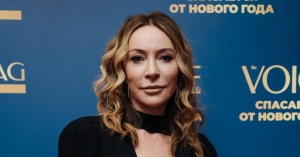
The Berenshtein family—figures in a scandal involving the siphoning off and embezzlement of hundreds of millions of rubles via the Canadian payment platform Ibanly, recently reported by VChK-OGPU and Rucriminal.info—has been found to possess extensive European business interests, as well as Russian business partners working with the state corporation Rosatom and defense industry companies.
The family patriarch, Gregory Berenshtein—a Swiss billionaire holding an Israeli passport—died in Moscow in March 2022 at the age of 63 and was buried at the Troekurovskoye Cemetery. Born in the USSR, he emigrated to Israel and worked in the investment sector in South Africa, where he graduated from the University of Pretoria. Following the collapse of the Soviet Union, he returned to Russia, served as an advisor to the President of Kalmykia, and later became a senior investment director at the Western NIS Investment Fund. In addition, Berenshtein managed the investment boutique ALMA Consultants Ltd and the private equity fund Agribusiness Partners International; he was a co-owner of the investment firm Zoom Capital (alongside partner Vadim Kurinoy) and the company NetbyNet, and held stakes in Fresh Market, the online hypermarket Vseinstrumenti.ru, the service Vse v Kredit, and the company Biomicrogels (BMG). Currently, BMG is the family's primary asset, held directly by the Berenshteins.
In BMG Group LLC, Elena Berenshtein holds a 54.15% stake; Pavel Blokhin and Andrey Elagin own 9% each; Maxim Mironov holds 7.5%; and Igor Klimkin holds just under 1.5%. The firm has four subsidiaries: Biopolymer and NPO BMG in the Sverdlovsk Region, BMG LLC in Moscow (at the Skolkovo site), and—until January 2025—BMG Vostok in Primorye (now liquidated). In recent years, the group's companies have registered dozens of trademarks, including Aquavalent, Carbosoft, SOLVIQ, MOLECULARIS, and many others.
Elena Berenshtein’s business partners, Elagin and Blokhin, also own the company Reinnolts—with assets valued at 1.2 billion rubles—which manufactures heat-exchange and industrial equipment for the energy, metallurgical, and oil sectors. Its counterparties include entities under sanctions, such as the Rosatom Corporation and Cyberstal LLC (which is subject to US blocking sanctions for its work with the military-industrial complex). ...and so on. Reinnoltz’s revenue last year totaled 859 million rubles; the company has issued bonds on the Moscow Exchange and holds Rostekhnadzor licenses for the design and manufacture of equipment for nuclear installations, radiation sources, and storage facilities for nuclear materials and radioactive waste. Its wholly-owned subsidiary, Reinnoltz Lab LLC, is a Skolkovo resident, where it conducts R&D. The company also works on Rosatom export contracts, manufacturing equipment for the El Dabaa NPP in Egypt—specifically, steam seal condensation units.
In addition, Blokhin and Yelagin each own a one-third stake in Ural-Siberian Company Nexson LLC, which also sells heat-exchange equipment to Russian state-owned companies and oligarchs—though in this case, the equipment is imported. The firm’s third business partner is the French company Nexson Group SAS; not only did it fail to exit the Russian market following the outbreak of the war, but it also viewed the situation as an opportunity to generate windfall profits. Its products for the oil and energy sectors continued to flow into Russia throughout 2024 and 2025, and in 2024, Nexson Group even acquired the German manufacturer Thermowave. While the company openly acknowledges that over 98% of its business comes from exports, it tends to avoid mentioning that these exports are destined for Russia. To minimize risk, the French firm established a subsidiary in China—NEXSON (BEIJING) INDUSTRIAL TECHNOLOGY CO., LTD.—and ships equipment to Russia from China rather than Europe. The French group has other subsidiaries in Russia to which it continues to supply equipment—for instance, the Moscow-based Nexson Rus LLC, in which Nikolai holds a stake. ...Allahverdov and Yevgeny Nugmanov.
Elena and Gregory’s sons—Alexander and Daniil—also previously held stakes in BMG and NPO BMG but withdrew as founders in late 2022. Currently, no businesses in the Russian Federation are registered in their names, though both are known to work in financial analytics. Furthermore, in 2020—according to data leaks from the Moscow Department of Health—Danil Berenshtein listed "Wolfline Capital," located in Moscow City, as his employer. Since 2016, this firm has been registered to Nikita Valeryevich Dolgiy. In a 2022 *Forbes Russia* article, Dolgiy promoted Hong Kong as a destination for secure payments and new Russian investments amidst the war. In 2023, the company established a legal entity in Singapore specializing in capital markets, corporate finance, and M&A; its website also mentions offices in London and Hong Kong. The trademark under which these companies operate, as well as their website, are registered to the Moscow-based LLC "Wolfline Capital." Yet, in international markets, Wolfline positions itself as a Singaporean company, making no mention of its Russian roots or the firm operating in Moscow. Leveraging this narrative, about six months ago the firm... It entered the U.S. market through the Landingplace Hotels project, which is building a platform to acquire and convert hotels into properties under the Landingplace brand. Landingplace Hotels is a mid-market hospitality franchisor founded by former executives from Marriott and Hilton. In reality, however, by relocating its parent company from Moscow to Singapore, Wolfline gained the ability to quietly invest Russian capital around the world.
Gregory Berenshtein himself also possessed a number of interesting and useful connections. For instance, leaked data reveals that, prior to the pandemic, airline tickets for a certain Alexander Palchikov were purchased using Berenshtein’s phone number. Palchikov is a financial analyst who previously worked at the investment firm FINAM and Gazprombank (which had partnered with Berenshtein on NetByNet) before heading a department at Gazprom PHG LLC. After the war began, Palchikov was promoted: he is now the CEO of "FK BUSINESS AKTIV" and "PSB FINANCIAL SOLUTIONS" (formerly known as "SMP Factoring"). Both firms are registered at the same address, and their founders are hidden from the Unified State Register of Legal Entities (EGRUL); however, as we discovered, both are owned by the military-linked Promsvyazbank.
Yet, Russian business is far from the only thing Gregory Berenshtein left to his family. His widow holds significant foreign assets, and—curiously—her management of them is not hindered even by her close ties to enterprises that supply sanctioned companies operating within Russia’s war economy.
For instance, Switzerland-based Elena Berenshtein owns 100% of the British companies BIOMICROGELS UK LIMITED (owner of the Biopolax brand, with assets of £175,000 as of 2025) and Biopolymers Limited (with assets of £6,000). Judging by their extensive loan history, both companies are used to move funds within a unified corporate group; for example, BIOMICROGELS UK has issued loans to Elena Berenshtein’s British entity Biopolymers Limited, as well as to Biopolymers Technologies Ltd (Thailand) and Biopolymer Technologies Media FZ-LLC (UAE). BIOMICROGELS itself owes over £180,000 to the BVI-based offshore entity Gatwick Group Limited—the vehicle through which Gregory Berenshtein held his stake in ZOOM Capital. Elena is assisted in managing the British business by Vladislav Perunov, a 46-year-old Muscovite. Leaked data indicates that he made regular trips to Russia in 2022 and 2023. The group also includes Biomicrogels Europe (Poland), which, together with... Perunov is managed by Andrey Yelagin; both he and Blokhin are co-owners of the firm. The company is active and filed financial reports for 2024.
In addition, Gregory Berenshtein held stakes in the Cypriot offshore entities BANSTILL INVESTMENTS LIMITED, HAVERBURG ENTERPRISES LIMITED, and HAYFLOR INVESTMENTS LIMITED—the latter two were liquidated after his death. His business partner in Cyprus was Viktor Kuznetsov, a co-founder of the company VseInstrumenty.ru; HAVERBURG ENTERPRISES LIMITED was one of the founders of that company. In 2024, the Russian business was transferred to PJSC VI.ru, an entity with undisclosed founders. It is known that, following Berenshtein’s death, Kuznetsov sought new investors.
It is also known that during the 2000s, Berenshtein was linked to anonymous Luxembourg-based companies—CITI TRUST and SCF—which established ELMS BROOK S.A. and MAYA HOUSE S.A.; the Agribusiness Partners International fund, managed by Berenshtein, held a stake in this business. After a series of mergers, only Maya House S.A. SPF remained, holding assets worth €8.6 million; it was liquidated in 2018.
VChK-OGPU and Rucriminal.info have learned of a fascinating story involving a mix of elements: a Maybach stolen from a Moscow-City parking lot by a homeless man; a Moscow official who funneled embezzled budget funds to Dubai; lawyer Alexander Dobrovinsky; and corrupt investigators.
As a reminder, VChK-OGPU and Rucriminal.info discovered that Alexander and Danil Berenshtein position themselves as consultants and advisors on moving money out of Russia (in... ...primarily in the UAE) using cryptocurrencies. All the schemes invariably involved crypto wallets on Ibanly, a platform registered in Canada. Once clients placed their full trust in the Berenshteins and began transferring very large sums, a "hiccup" would occur. The brothers would regretfully announce that Ibanly had blocked all funds and "wash their hands of the matter," leaving the clients to deal with the platform themselves. Ibanly, for its part, would respond to inquiries by stating that the funds in the crypto wallets had been frozen as part of KYC procedures and demanded documentary proof of the funds' origin. Of course, the whole thing was a scam. A preliminary investigation revealed that "D.G. Berenshtein and A.G. Berenshtein are the beneficial owners of Ibanly." In other words, it was their platform. Since the money belonging to almost all the clients was of illicit origin, they could not provide the required documentation—nor did they dare to go to law enforcement.
This continued until the brothers "swindled" businesswoman Guzel Sunieva. Initially, she transferred 8 million rubles, and the money soon arrived in the account of the family firm, Advise Associates Consulting FZE, in the UAE. Guzel then transferred another 26 million rubles, and half of th... ...of the sum reached the intended recipient. Sunieva sent another 135 million rubles. It was at this point that she heard the story about the cryptocurrency funds being frozen on Ibanly.
However, this time the client proved to be a tough nut for the Berenshteins to crack. The fact is that Guzel is a close relative of Albert Suniev. Until 2023, he served as the director of JSC Mosinzhproekt and the CEO of JSC UEZ—two major subsidiaries of the Moscow government.
Matters were heading toward the initiation of a criminal case; the brothers hastily fled Russia, and their mother turned to a longtime acquaintance, lawyer Alexander Dobrovinsky (though the brothers were officially represented by his partner, Andrey Aleshkin). Ultimately, resolving the issue came at a very high price for Elena Berenshtein. Albert Suniev’s family was fully compensated for the entire "frozen" amount, plus interest and full reimbursement of expenses. Meanwhile, the Main Investigative Directorate of the Investigative Committee issued a formal decision not to initiate criminal proceedings. Rumor has it that this step cost another 100 million rubles.
As for the Berenshtein brothers, they have returned to their old line of work. However, instead of Ibanly, a different platform is now being used in their schemes.


