Few in modern Russia retain any illusions about the "equality of all before the law and the courts" promised by Article 19 of the Constitution, but just a year ago, at least a semblance of justice existed. But then things took off—the "Dolina case," the high-profile dispute between the PayQR trademark holder and Sberbank, and so on.
It would seem that the judicial system was entrusted to Igor Krasnov with the goal of increasing public trust in the courts, but over the past six months, that trust has plummeted. And now even the judicial system itself has lost confidence in the judicial system.
FIT (PayQR) vs. Sberbank (SberPay QR)
Today we'll focus on the latter case, as it has caused a shift in public opinion, and the growing investigations against Sberbank have uncovered a fascinating scheme for the "raider seizure" of someone else's intellectual property.
A minimal examination of the case materials (revealed by both witnesses and court decisions) quickly leaves a bad taste in the mouth. And the first to experience this taste was Judge Boris Steshan of the Ninth Arbitration Court of Appeal, who was assigned case No. A40-166729/2024. The reflexive "small company wanted to make money off a big bank" collided with the harsh reality:
PayQR payment service mobile apps have been operating in Russia for many years (App Store archive 2015, Google Play archive 2015);
PayQR's trademarks were registered 10 years ago;
FIT, the owner of PayQR, has not registered any other trademarks;
Sberbank and FIT have known each other for 10 years (since the PayQR project was accepted into Skolkovo);
Sberbank has previously allowed and eliminated violations of FIT's rights to PayQR's trademarks;
Before filing the lawsuit, FIT spent several years trying to persuade Sberbank to stop using the PayQR trademarks without demanding payment;
FIT has not filed lawsuits against anyone other than Sberbank;
Sberbank has not registered trademarks for its SberPay QR and "Pay QR" services.
However, PayQR's director and owner, Gleb Markov, has worked in the payment services industry for over 15 years, as evidenced by his work record book and diplomas, published by the court.
The fact that the amount claimed does not correspond to FIT's revenue is that, had Sberbank legally used the FIT trademarks, royalties under the licensing agreement would have been paid from Sberbank's revenue (as the licensee), not FIT's. After all, no one forced Sberbank to choose names for its services similar to those of its former partner. Furthermore, the forensic expert could have reached a different valuation had Sberbank not overturned it in the cassation court (since the new amount could have been even higher).
Perhaps all of this combined, along with the fact that the names PayQR and SberPay QR are virtually identical, compelled the judge of the Ninth Arbitration Court of Appeal to rule not in favor of the state-owned company, but in accordance with the law. Perhaps Boris Steshan even realized he would soon retire, and with over 20 years of judicial experience, he wanted a decision that would be demonstrably fair, "as in civilized countries." One can speculate as much as one wants, but the fact is that on March 13, 2026, the day the Intellectual Property Court overturned the appellate court's decision, both the judge himself and Sergei Sedov, Chairman of the Ninth Arbitration Court of Appeal, submitted their resignations. It's difficult to recall any similarly large-scale moves in arbitration courts before this.
At Home
The first to express dissatisfaction with the cassation court's ruling in the FIT v. Sberbank case (allowing Sberbank to use names similar to FIT trademarks free of charge) were intellectual property lawyers and patent attorneys, who are simply losing their jobs. The fact is that after this decision by the Intellectual Property Court, registering trademarks, much less attempting to sue anyone for their illegal use, became completely pointless in Russia.
In simple terms, business used to use "designations" and "designations registered as trademarks." The law protects only "trademarks," so if a conflict arose between "trademarks" and "unregistered designations," the latter would lose by default. And an entire industry has developed around the registration, maintenance, and protection of trademarks in virtually every country.
The letter of the law in Russia still protects only "trademarks," but the Intellectual Property Court, with its PayQR precedent, contradicted the law: "designations" can be equated with "trademarks" (even if the "designations" infringe someone's rights to "trademarks") if the "designation," instead of being registered as a "trademark," is widely used, resulting in consumer adoption. The issues of proving consumer adoption and criteria for the breadth of use (e.g., duration) The court left unanswered any legal provisions that would have provided for the existence of such "designations."
Then lawyers and judges stepped in, outraged by the Intellectual Property Court's flagrant violation of procedural law. The first and only hearing in the FIT v. Sberbank case was postponed for a month—until the plaintiff filed a cassation appeal, before the deadline for filing cassation appeals (violation of Article 278 of the Arbitration Procedure Code of the Russian Federation), and with only two days' notice of the hearing (violation of Article 121 of the Arbitration Procedure Code of the Russian Federation). Domestic entrepreneurs, already depressed, are proposing the logical, "Let's amend the Constitution so that the law does not apply to state-owned companies, since there's no hope of adversarial proceedings against such defendants anyway."
Whether Igor Krasnov is involved in this violation of the law will be determined by whether the Supreme Court accepts FIT's complaint. Citizens are unanimous that the case should be retried. It's strange that petitions and protests haven't yet been launched.
"The Grefstein Files"
The most interesting thing is that yet another of Sberbank's schemes has surfaced, helping it earn over a trillion rubles annually (and that's not even from fees for internal transfers between Sberbank clients, which are cursed by many).
It's long been known that Sberbank is the country's leading corporate raider (Case 1, Case 2, Case 3, etc.), but in the age of artificial intelligence, it's intellectual property that must be seized. And German Gref, as always, is chasing the lead in everything.
As established both in the ruling of the Ninth Arbitration Court of Appeal and by independent investigators, Sberbank and PayQR have a long history of cooperation.
Before launching its own QR payment products, Sberbank spent several years negotiating with FIT, ostensibly to acquire the company (constantly hyping up the deal with promises to at least integrate PayQR into one Sberbank project after another), but in reality, to obtain their source code, customer database, and so on. Once all useful information had been extracted from FIT, Sberbank withdrew from the negotiations and began developing alternatives, which it launched a couple of years later.
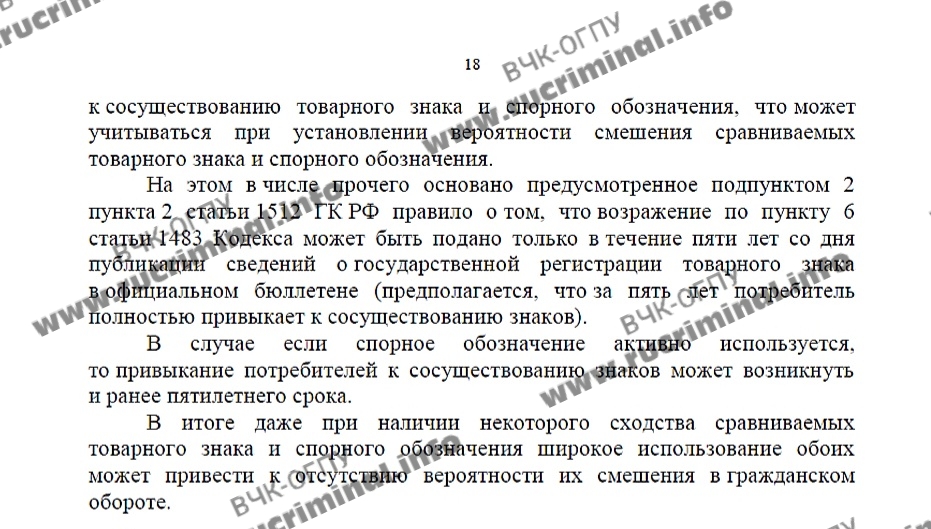
But Sberbank deemed simple "industrial espionage" insufficient, so it cloaked its products (including a standalone mobile app) in dozens of names that closely resembled PayQR, even going so far as to directly use the name "PayQR" without the "Sber" prefix. And, since paying FIT anything wasn't in Sberbank's plans, it began taking actions to keep FIT on a short leash for as long as possible and delay FIT's legal action—satisfying some of FIT's claims, initiating and then terminating trademark challenges to PayQR in Rospatent, etc. Before the lawsuit appeared in court, Sberbank registered the "SberPay" trademark in 2021, omitting the "QR" suffix. In 2023, it integrated other banks into the "Pay QR" platform (involving as many accomplices as possible), and in 2024, it made its "SBER" trademark well-known.
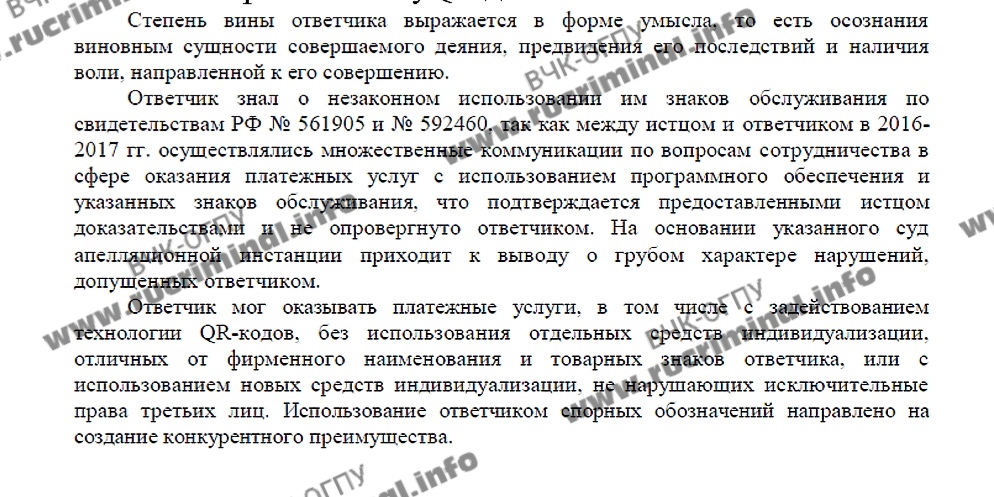
All this time, of course, Sberbank popularized the SberPay QR designation, leading to a rapid decline in PayQR's financial performance, starting precisely from the moment it was forced to compete with Sberbank in 2019. Users became confused between the two "paywalls" and chose Sberbank's because "it's state-owned." The functionality remains the same. And as soon as Sberbank felt more confident in its legal position, it simply stopped responding to FIT's letters. The court refused to protect the PayQR trademark owner as required by law, which is why a nationwide fundraising effort may now be necessary to save FIT.
Article 35 of the Constitution promises legal protection for private property, which includes intellectual property. However, the Intellectual Property Court, acting on orders from Sberbank (the owner of the "pocket arbitration court"), deprived FIT of its private property – without legally terminating the existence of the PayQR trademarks, it deactivated their exclusive rights.
What happened next?
It will be interesting to see how the unification of lawyers and judges with citizens from other professions who seek justice in the fight against a state-owned bank and everyone associated with it will impact the upcoming State Duma elections. We advise entrepreneurs to never again associate with state-owned companies.
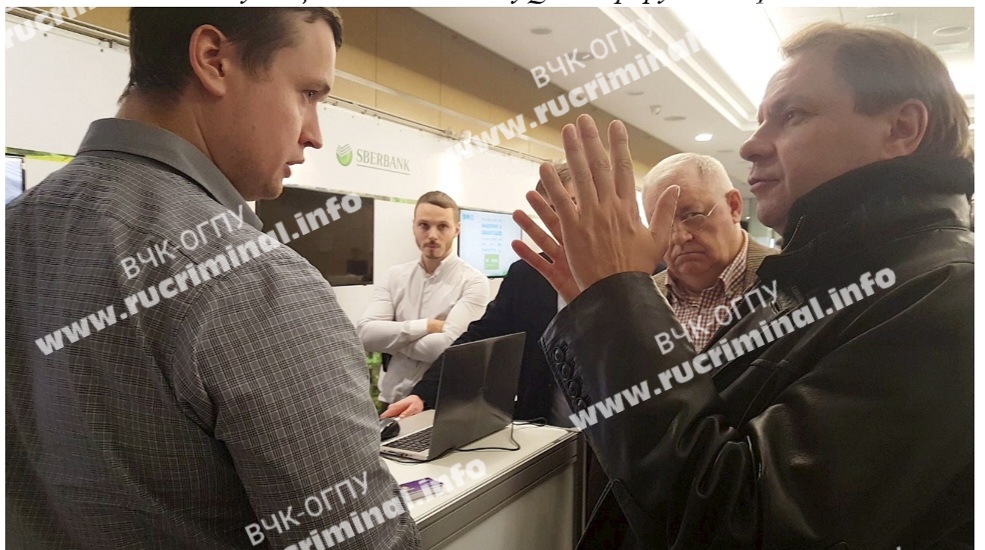
Exclusive footage: PayQR CEO Gleb Markov and Sberbank Deputy Chairman Stanislav Kuznetsov at the PayQR stand at the Sberbank Forum in 2016.