


Effective February 19, 2025, Deputy Mayor of Moscow Maxim Liksutov signed a decree addressed to the State Unitary Enterprise "Moscow Metropolitan," requiring every developer within the metro's security zone, which covers approximately half of Moscow's entire city, to commission work from RUT MIIT (see document). Also known as the Russian University of Transport.
On paper, all developer funds should go to the state budget, but, as VChK-OGPU and Rucriminal.info discovered, in reality, they end up in the pockets of Gamid Bulatov, First Deputy Head of the Department of Transport, Anton Bochanaev, First Deputy Head of the State Unitary Enterprise "Moscow Metropolitan," and Alexander Klimov, Rector of RUT MIIT. We explain how the scheme, which we were able to uncover, works.
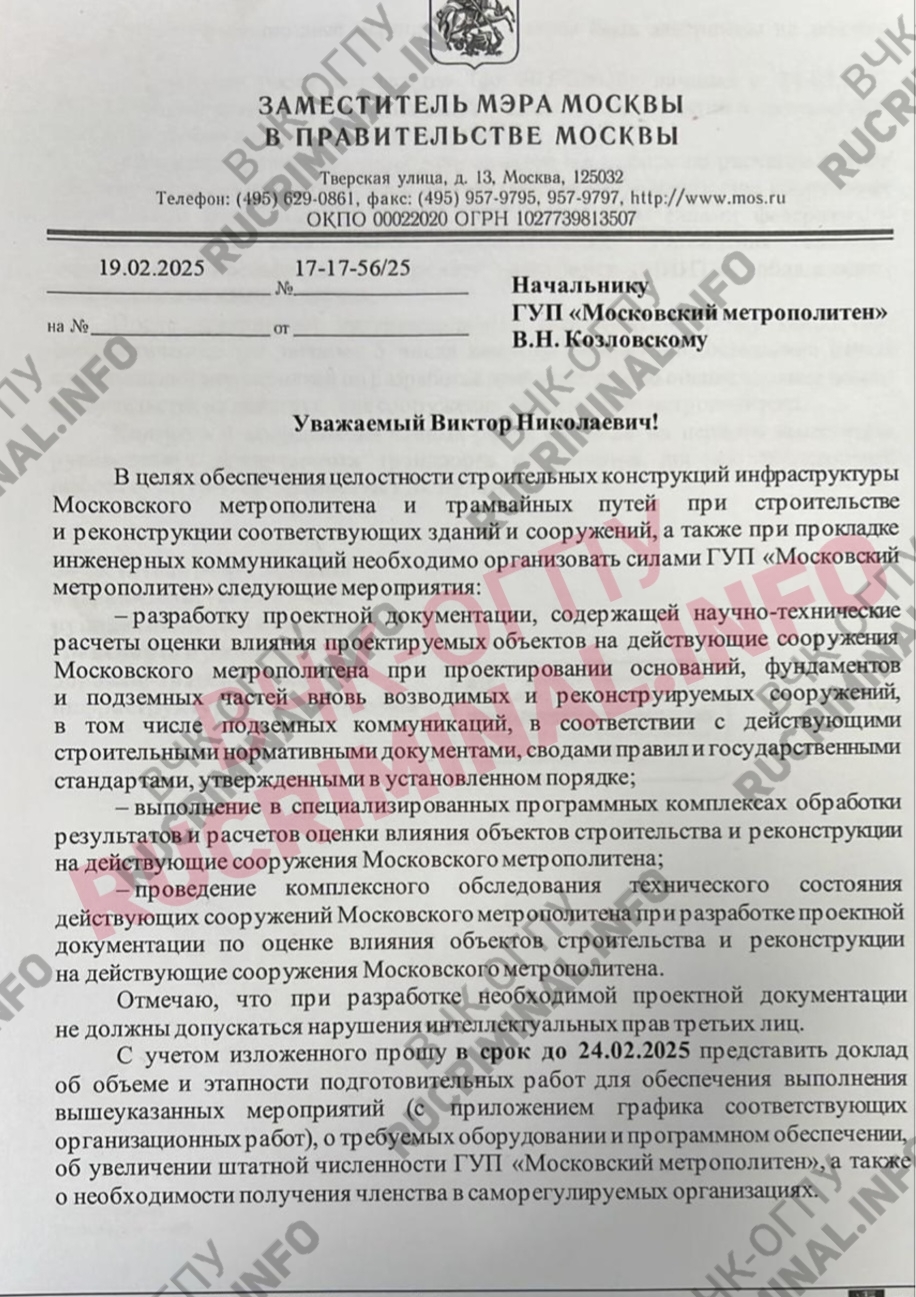
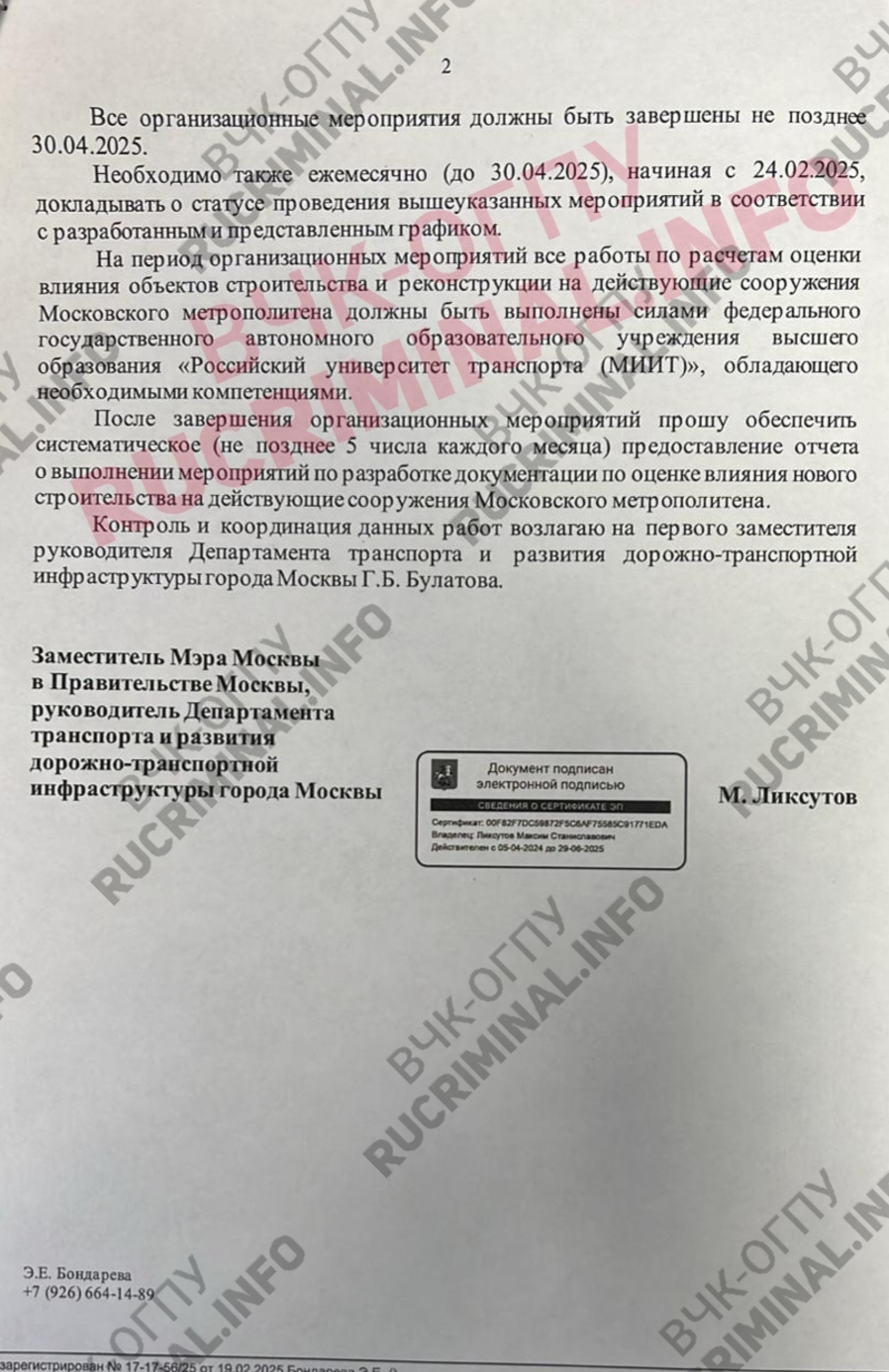
Episode #1. Appeal to the Metropolitan. In order for a developer to build a residential complex or any other building near a metro station, they must obtain approval from the Moscow Metropolitan State Unitary Enterprise. Without this approval, construction will be immediately halted by Mosgosstroynadzor. By submitting a request to the Metropolitan, in accordance with current regulations, the developer receives a requirement to develop various scientific and technical reports. Then, Anton Bochanaev himself or his deputy, Andrei Fyodorov, contacts the developer's management or owner and invites them to their office. There, they brandish Liksutov's letter and inform the developer that they should only contact MIIT.
Episode #2. Contacting MIIT. The developer writes to MIIT and falls into the clutches of one of the rector's two teams. The first team is led by Oleg Shvydchenko, deputy head of the New Projects and Technologies Department, whose technology, for unknown reasons, is not handled by a full-time employee but by Armen Ter-Martirosyan, vice rector of another university, MGSU. The second team is Alexander Piskunov, head of the Bridges and Tunnels Department. On paper, Alexander Sonin, also from the same department, is responsible for the equipment, but in reality, things are much more interesting. Piskunov explains to clients that MIIT takes a long time to complete the work and that student training is a priority, so it's better to contact the private company Vibropro.
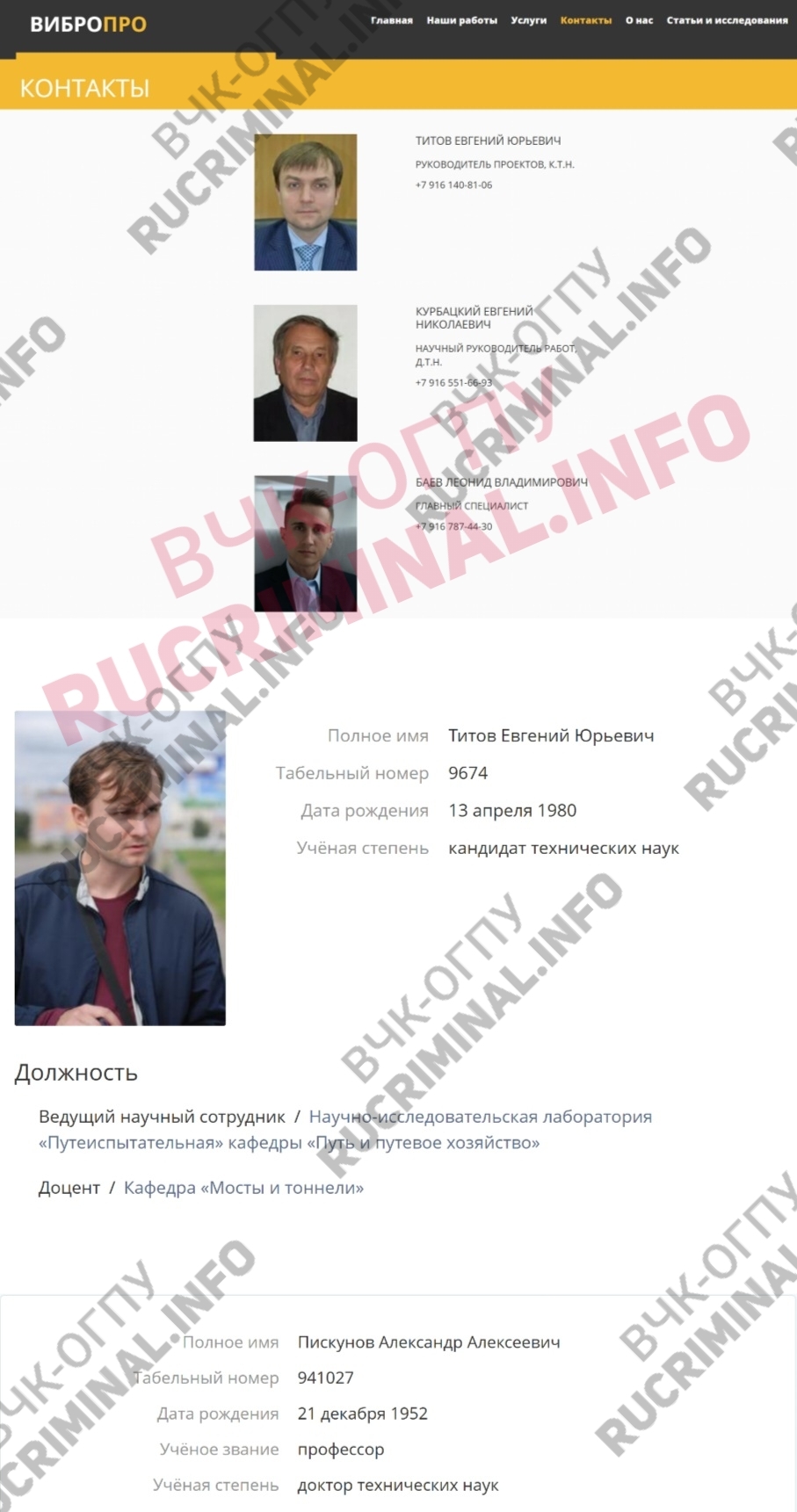
Episode #3. "Vibroprotection." Meet the most important link in this chain: Evgeny Titov. He is the founder of Vibropro (TIN 9717164150), the CEO of Vibropro, and an associate professor in the Bridges and Tunnels Department at MIIT, which Piskunov heads. Vibropro consists of four people, each of whom is an MIIT employee (see photo). Through him, Piskunov diverts orders from MIIT to their private company. This company then receives approvals from the Metro.
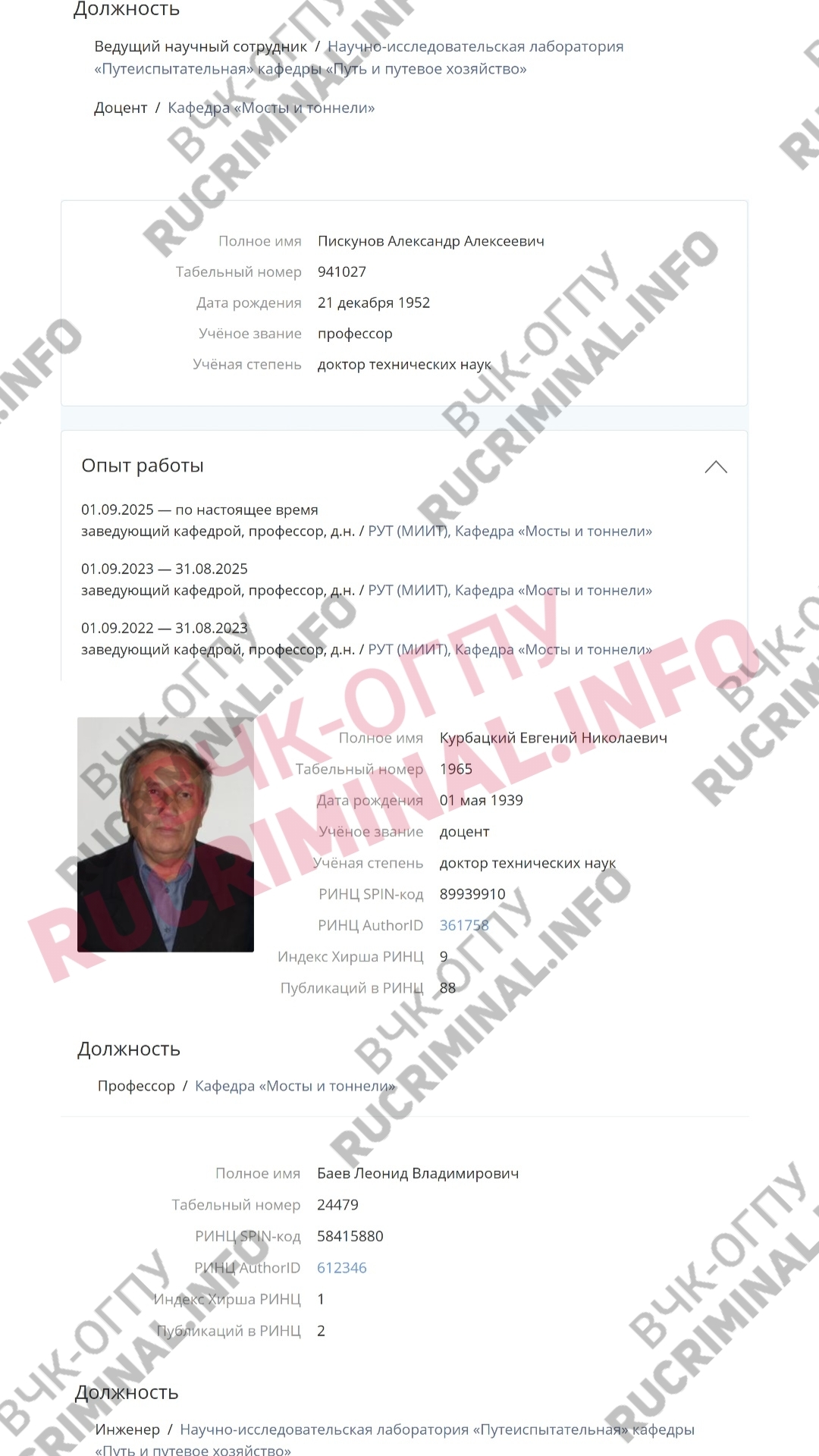
Episode #4. The entire chain is exposed. Titov, from Vibropro, charges the client huge sums of money and guarantees a quick result, diverting the order from MIIT, where he also works. He then transfers 30% of the sum to his patrons – Piskunov and MIIT Rector Klimov. Klimov, in turn, through intermediaries, pays Anton Bochanaev personally or his deputy, Andrei Fyodorov, from the Metropolitan for quick approval. According to a source, he also pays Gamid Bulatov for a document about MIIT, which he signed off on by his boss, Deputy Mayor Liksutov, thus cutting off all competitors and further covering up this dirty scheme. Everyone in the uncovered corruption ring is happy, except for the developers and ordinary citizens who are forced to overpay for apartments because of corrupt officials, fraudsters, and the deputy mayor who oversees corruption in his own department of transport. And this isn't tens of millions, not hundreds; it's a market worth tens of billions of rubles. These are expenses that the developer pays out of desperation and then passes on to Russians and their wallets.


