


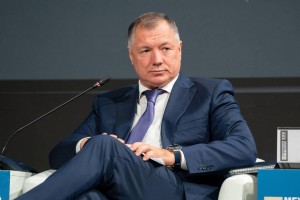
The Krasnoyarsk metrotram, which Deputy Prime Minister Marat Khusnullin once demanded a 20-30% price reduction, has instead increased in price by approximately 34 billion rubles. The cost of the main contract between the Center for Transport Logistics and JSC Mosproekt-3 increased from approximately 89 to 123 billion rubles after adjustments—an increase of almost 40%.
The Center for Transport Logistics explains the increase by the fact that at the time the contract was signed in 2022, Russia did not yet have the necessary technical standards for metrotram construction. The regulatory framework was later developed, the design was completed, the state review was conducted, and the solutions were adjusted, including to take into account the specific characteristics of Krasnoyarsk's soils.
Thus, a multi-billion-dollar contract was signed before the requirements and all technical parameters of the project were finalized. When the project was completed, its price was tens of billions higher.
This story is especially piquant due to the figure of former Mosproekt-3 general director Anna Merkulova and her long-standing ties to Khusnullin. According to a source at the Cheka-OGPU and Rucriminal.info, Merkulova's career took off during his tenure as head of the Moscow construction complex. In 2014, Khusnullin publicly announced her nomination to head the merged design institutes of Moscow, calling her a talented manager and crediting her with significant budget savings.
In 2021, now as Deputy Prime Minister, Khusnullin ordered a study to reduce the cost of the Krasnoyarsk metro by 20-30%. Soon, the previous concept of a classic metro was revised in favor of a combined underground and surface light rail system, and in August 2022, the largest contract for the design and construction of the project was awarded to Merkulova's Mosproekt-3.
The previous head of the Krasnoyarsk metro ended in a criminal case. The documentation was prepared by KrasnoyarskTISIZ JSC, associated with Oleg Mitvol, former prefect of Moscow's Northern Administrative District. An investigation into embezzlement during the design process resulted in prison sentences for Mitvol and several Krasnoyarsk officials, after which the project was effectively restarted.
The new project was financed, in part, through an infrastructure budget loan—one of the key instruments of the federal construction bloc overseen by Khusnullin. In 2023, Merkulova personally reported to the Deputy Prime Minister on the progress of the work, and Mosproekt-3 reported that it was on schedule.
However, the promised rapid completion of the construction did not materialize. As a result, Merkulova resigned as general director of Mosproekt-3, after which the company's new management began challenging some of the deals concluded under her leadership. Specifically, in the case of the Nizhny Novgorod metro construction, the company claimed that the cost of the work was inflated and attempted to recover nearly 2 billion rubles.
At the same time, the Cheka-OGPU and Rucriminal.info published information about multi-billion-ruble claims against Merkulova herself. The materials mentioned 4.9 billion rubles, dubbed a "golden parachute" by the authors, as well as real estate in Cap-Ferrat, France, worth approximately 20 million euros, which sources linked to Merkulova and Khusnullin.
Meanwhile, the former partners in the Krasnoyarsk construction project are settling their differences in arbitration. Mosproekt-3 is demanding approximately 626 million rubles from the Center for Transport Logistics, including approximately 496 million rubles in withheld penalties. The contractor blames the client for the delays, citing the late transfer of documentation, sites, and initial data. Specifically, the company claims the site planning project was submitted 510 days late.
Now, another 34 billion rubles have been added to this set of circumstances. The project, which the federal construction complex restarted under the slogan of speeding up and reducing costs, has turned out to be significantly more expensive than the original contract, and its implementation is fraught with lawsuits, mutual financial claims, and questions about decisions made at the outset.
Therefore, the main question today is how exactly the additional 34 billion rubles came about, who approved the initial price when the regulatory framework was incomplete, and why the need for such a significant cost increase was discovered only after the contract was signed. Khusnullin's order to reduce the cost of the Krasnoyarsk metro by 20-30% ultimately led to a rather peculiar outcome: the main contract has become almost 40% more expensive.


