


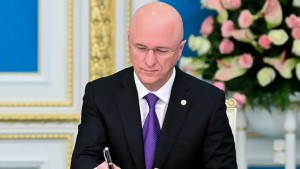
It's time to call a spade a spade and, without the diplomatic fog, examine the political career of one of Kazakhstan's most controversial officials—Roman Sklyar, long dubbed "Bald" or "Eternal Deputy" behind the scenes. While the first nickname needs no explanation, as the years have taken their toll, the second he earned himself—over the years, methodically, consistently, and, it must be admitted, quite prudently. Diligently carving out deputy positions for himself, while not forgetting to wield the power to make the most lucrative and lucrative decisions.
Sklyar made his career not as a leader, but as a master of the second position. As an official who prefers to remain half a step behind, maintaining maximum influence with minimal personal responsibility. For decades, he has risen precisely along the trajectory of deputy—but a deputy who wants not just to sit near the center of decision-making, but to control the very mechanism of these decisions.
Throughout his career, Sklyar spent only a short time as the full-fledged top official in a department. And it seems this isn't a coincidence, but a style. Because the top official is responsible. But the "Eternal Deputy" can decide, push, lobby, distribute, direct, and yet remain in the shadows at critical moments. The formula for this career seems utterly cynical: the boss accumulates all the negativity, and his deputy makes the decisions.
It is precisely in the art of concentrating authority without assuming full responsibility that Sklyar, according to his critics, has achieved a near-exemplary level. His political logic is simple: the fewer procedures, the more room for manual control; the weaker the controls, the wider the corridor for behind-the-scenes agreements; the more vague the criteria, the more convenient it is to allocate resources in the "right" direction.
And in the art of consolidating authority without responsibility, Sklyar is perhaps unrivaled. The pinnacle of his talent for misleading his superiors was convincing President Kassym-Jomart Tokayev that bureaucracy is not an element of state control, that it only hinders investment in Kazakhstan, and therefore it is necessary to remove all obstacles—that is, essentially, state and public control—and hand over to Sklyar all the levers for determining investment directions, meaning the right to choose the right entrepreneur, and the levers for distributing state support, meaning money for this rightful entrepreneur. Moreover, according to Sklyar's logic, all this should be done without any tenders, without professional asset valuations, without environmental risk assessments, without economic calculations. All this "bureaucracy" is replaced by the decision of one man—Roman Sklyar.
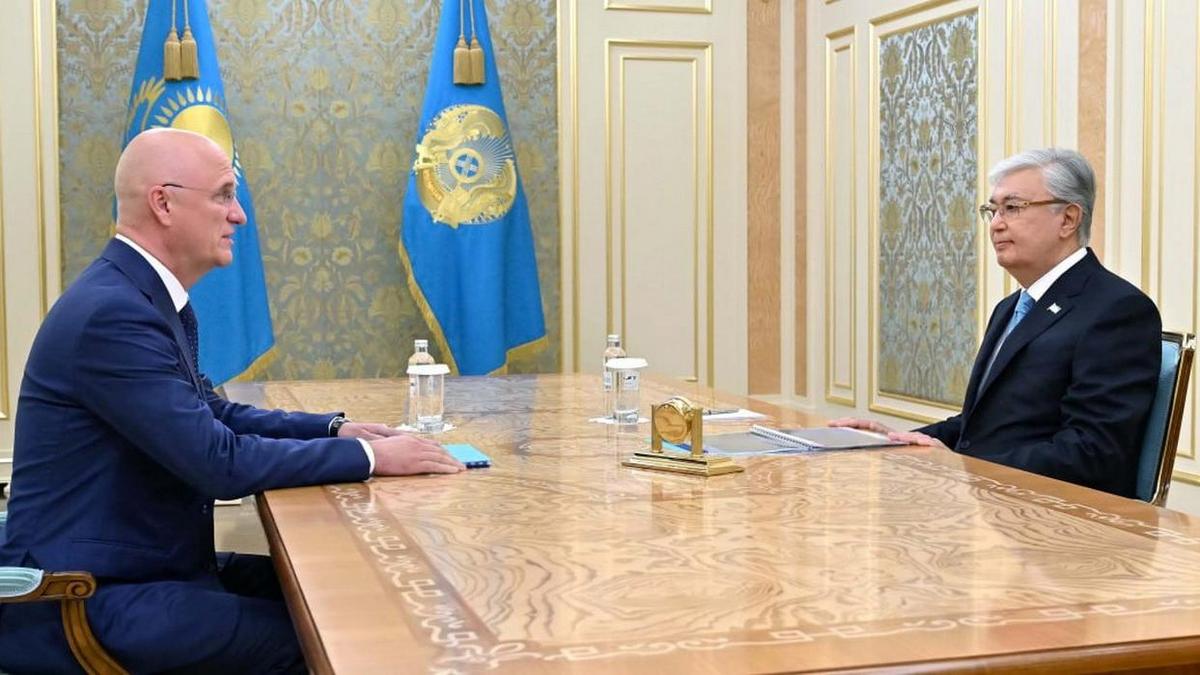
And then, apparently, our hero decided he had struck gold: he now makes the decisions, and the government is responsible. What decisions did Sklyar make, and who benefited from the golden shower of state benefits and budget funds? First, there's Lavrentyev, his main business partner in the embezzlement of public funds, his purse strings, and his fixer of sensitive issues. It was he who lorded it over the privileges for the screwdriver-assembly business of imported cars, the hundreds of billions of tenge in auto recycling fees collected from the people of Kazakhstan, and, most importantly, the approximately $3.25 billion difference in the sale price of Lakshmi Mittal's assets. This includes not only ArcelorMittal Temirtau, but also ArcelorMittal Tubular Products Aktau. Lavrentyev purchased this entire complex of highly profitable enterprises for a paltry $286 million. In other words, the asset was sold for less than its revenue for six weeks!
But this isn't the entire trail of Sklyar's scandalous, obviously corrupt, yet always unilateral decisions.
One might recall how Sklyar decided to ruin the unique natural beauty of the Western Tien Shan UNESCO World Heritage Site. It was he who insisted on approval of the project to build a water pipeline with a cascade of hydroelectric power plants on the Ugam River in the Turkestan region. The stated goal of the project is to provide quality drinking water to approximately 1 million residents of the Turkestan region. However, the environmental coalition "Rivers Without Borders" has repeatedly criticized this project for the threats it poses to this transboundary site. "We are told that the project to build a hydroelectric power plant and water pipeline in the central element of the World Heritage Site—the Ugam River—is the best option of all the alternatives considered," Alexander Kolotov, director of the public foundation "Rivers Without Borders," said at a meeting with a UNESCO mission in Shymkent last fall. "What could be worse than the currently proposed damming of the river with a cascade of dams, fragmenting the river system, creating a series of reservoirs that would destroy the river ecosystem, and irrevocably siphoning off part of the Ugam River's flow?" Let's not forget the scandalous decisions pushed through by Sklyar and related to the mechanism he introduced to attract investment into the pharmaceutical industry—investment agreements (IIAs). The first priority access to government contracts was given to a company created just a couple of months earlier. A complete newcomer to the market. Its founders included Russian legal entities under sanctions, which threatened grave problems for the Kazakh economy.
The Investment Headquarters, which the President viewed as a tool designed, firstly, to analyze the reasons why projects were being transferred to other countries and, secondly, to introduce mandatory capital expenditure indicators to prevent ineffective state projects and corruption during their implementation, turned into its opposite under Sklyar's leadership – a machine for the uncontrolled transfer of public funds into the bottomless pockets of Sklyar's friends.
The second lie Sklyar managed to sell to the President was the idea that he was a kind of bridge between his large northern neighbor and Kazakhstan. He allegedly had extensive connections and could resolve any complex issues in the neighboring countries' relations. But then Ust-Luga happened, and we see that his efforts were to no avail. And Sklyar lacked any leverage or resources to solve this serious, but not the most difficult, problem. It would seem that if you have such impressive connections, it would be worth negotiating the release of our compatriots. But he's like that old nag in the joke: "Sorry, man, I just didn't get it." Perhaps his failure was due to Russia's irritation with Sklyar's decisions, as he systematically and practically for nothing drains Kazakhstan's resources to American and Chinese companies.
With the adoption of the new Constitution, a new, glittering peak has opened up for the "Eternal Deputy," one he has set his sights on. Once conquered, he can gain even more power and wealth, while habitually blaming his boss for all the anti-people decisions he's made. And that's nothing less than the position of vice president. Will Roman Sklyar succeed in conquering this peak, or will his reckless intrigue and misuse of the people's money lead him to ruin? Quite soon we will know the answer to this question that worries the people of Kazakhstan.


