


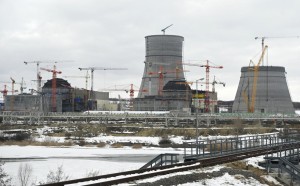
The Cheka-OGPU and Rucriminal.info investigated why Rosatom is delaying the construction of the second power unit for Kursk NPP-2 and concealing information about its progress. It turns out that the necessary sanctioned equipment was never obtained, so now the entire project will have to be either redesigned or reengineered—and it remains to be seen which is more dangerous for residents of the Kursk region.
The plant was originally intended to replace the Kursk NPP, which had reached the end of its service life. Therefore, it was planned that Rosatom specialists would restart the first two units of Kursk NPP-2 before the two units were decommissioned. However, as usual, something went wrong, and the old units had to be shut down in 2021 and 2024 (units 3 and 4 are still operating), leaving no time for new ones to be built.
The first power unit at NPP-2 was scheduled to launch in 2020, but the deadline was later pushed back to 2022. In reality, it wasn't until December 31, 2025, that it was finally commissioned. However, full commissioning hasn't yet occurred; it's currently in the pilot operation phase. The fate of power unit No. 2 remains uncertain.
Power Machines JSC, owned by Alexey Mordashov, was supposed to design, manufacture, and supply the turbine units for the second power unit. But everyone wants to profit from government contracts, so Power Machines split the deal with Rosatom's favored supplier, Okan JSC, owned by Vyacheslav Tomshinsky (which receives billions of rubles in orders from Rosenergoatom, Atomstroyexport, and other state corporation enterprises), signing a contract with them in 2017 for the design and supply of the necessary equipment. Incidentally, Silmash was hit by sanctions back in 2017-18 due to its deliveries to annexed Crimea, making it difficult for the company to work with its European counterparties.
Okan, of course, is no pushover either, and routed the contract through yet another shell company—its subsidiary, IPC OKAN. It had already signed a contract with Bush Vacuum Russia, the Russian representative of the British company Busch GVC Ltd, to supply six liquid ring vacuum pumps for two power units. They were scheduled to be delivered to Power Machines by mid-March 2022. The British company manufactured and delivered the first batch in 2022—the customer received three pumps in August. Then, due to the war, sanctions were imposed, making deliveries even through third countries impossible. Okan pondered for a long time how to circumvent the ban, but in 2024, it was forced to admit that the plan was a priori a failure and proposed that Power Machines terminate the contract. Then, an interesting discovery emerged: according to the 2017 contract, Okan itself was the pump manufacturer. The British company only appeared in the documents in 2020, when Okan realized it was time to "optimize equipment manufacturing lead times." Power Machines refused to terminate the contract, demanding that the pumps be delivered within 30 days. Okan then filed a lawsuit to terminate the contract, and Power Machines counterclaimed for nearly 15 million rubles in penalties for late payment, plus fines, penalties, and other financial sanctions. The legal battles have continued since 2024, with varying success. Okan is currently winning, having successfully secured contract termination and a reduction in the penalty from the late payment to 2.2 million rubles on appeal.
As for the British pumps for the second power unit of Kursk NPP-2, they are still missing. And judging by the fact that Busch GVC Ltd hasn't even started manufacturing them, Rosatom is in big trouble.


